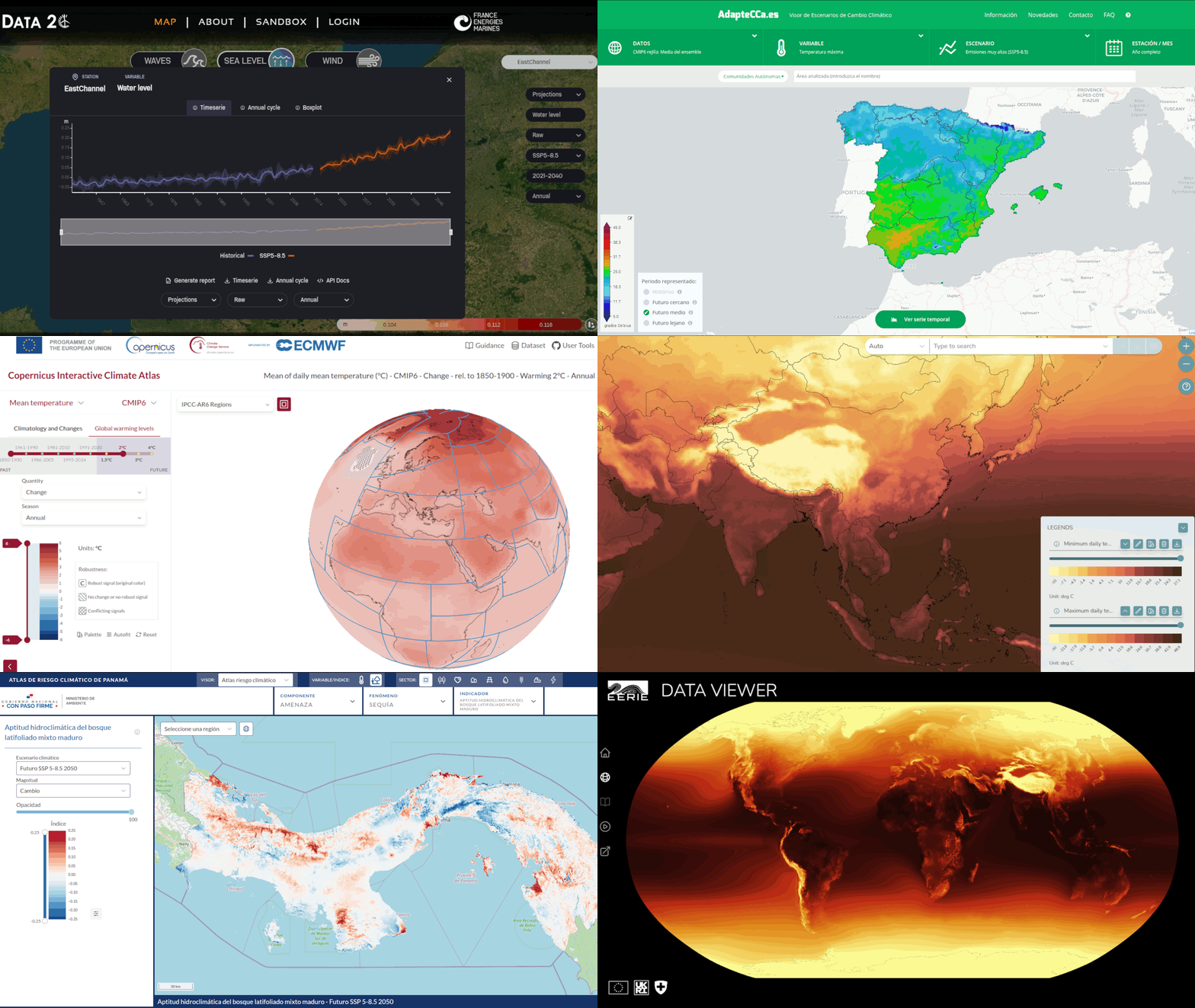
2025 has been a year of growth for Predictia – we started last year fully settled at our new premises, we updated our visual ID, redesigned our website and started many new projects, which has led to an increase in our ranks.
Although the most visible part of our work rests in the delivered data management and visualisation solutions for a variety of institutions. A summary of those follows.
Launched in 2025
The COVID-19 Atlas –an interactive tool for exploring what happened in Spain throughout the seven COVID-19 waves 2020-2023 developed for the Instituto de Salud Carlos III– allowed us to dig deeper in one of our specialties: health data. Want to know more about this viewer? Please visit this post in our blog.
The Panama Climate Risk Assessment Atlas was undoubtedly one of the top products launched last year. This tool offers threat estimations and potential impacts, both current and future, related to climate in the Central American country. We co-developed this project with the Instituto de Hidráulica de Cantabria for the Panama Ministry for Environment.
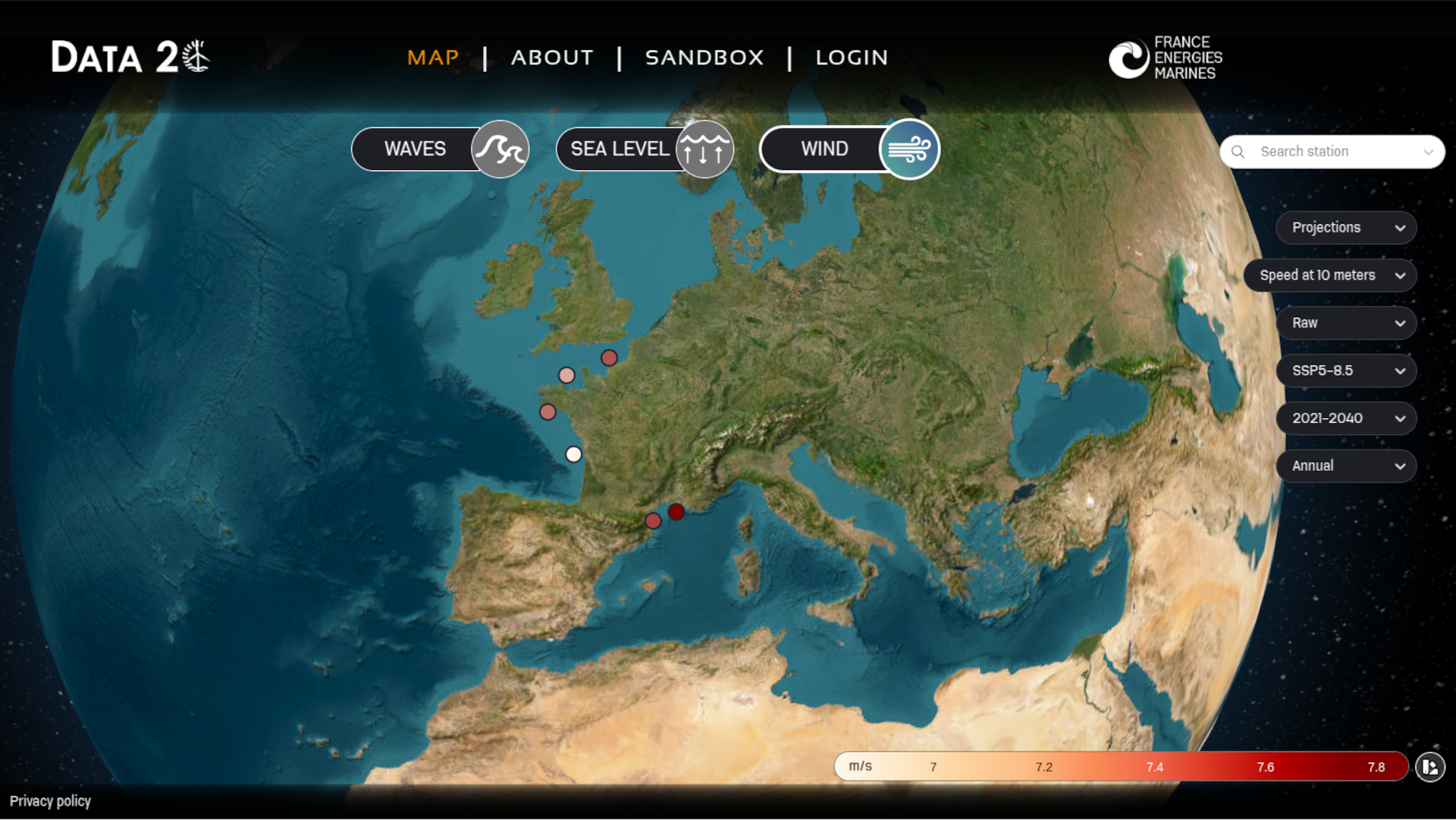
Partially related to the previous data viewer, the focus of the 2Cnow Viewer –developed for France Energies Marines– is the energy production forecast for offshore renewable energy plants, as well as potential climate change-related threats such as rising sea levels. You can explore it here.
Our custom climate change projections service, Climadjust, also got boosted with a simplified service, a better characterisation of uncertainty and providing sector indexes, as we explained in a previous post.
Lastly, our latest launch has been the first version of the EERIE project Data Viewer. The project deals with improving the representation of ocean eddies and currents in earth-system models and their interaction with climate. We’ll be publishing a post here on this soon.
Redesign and updates
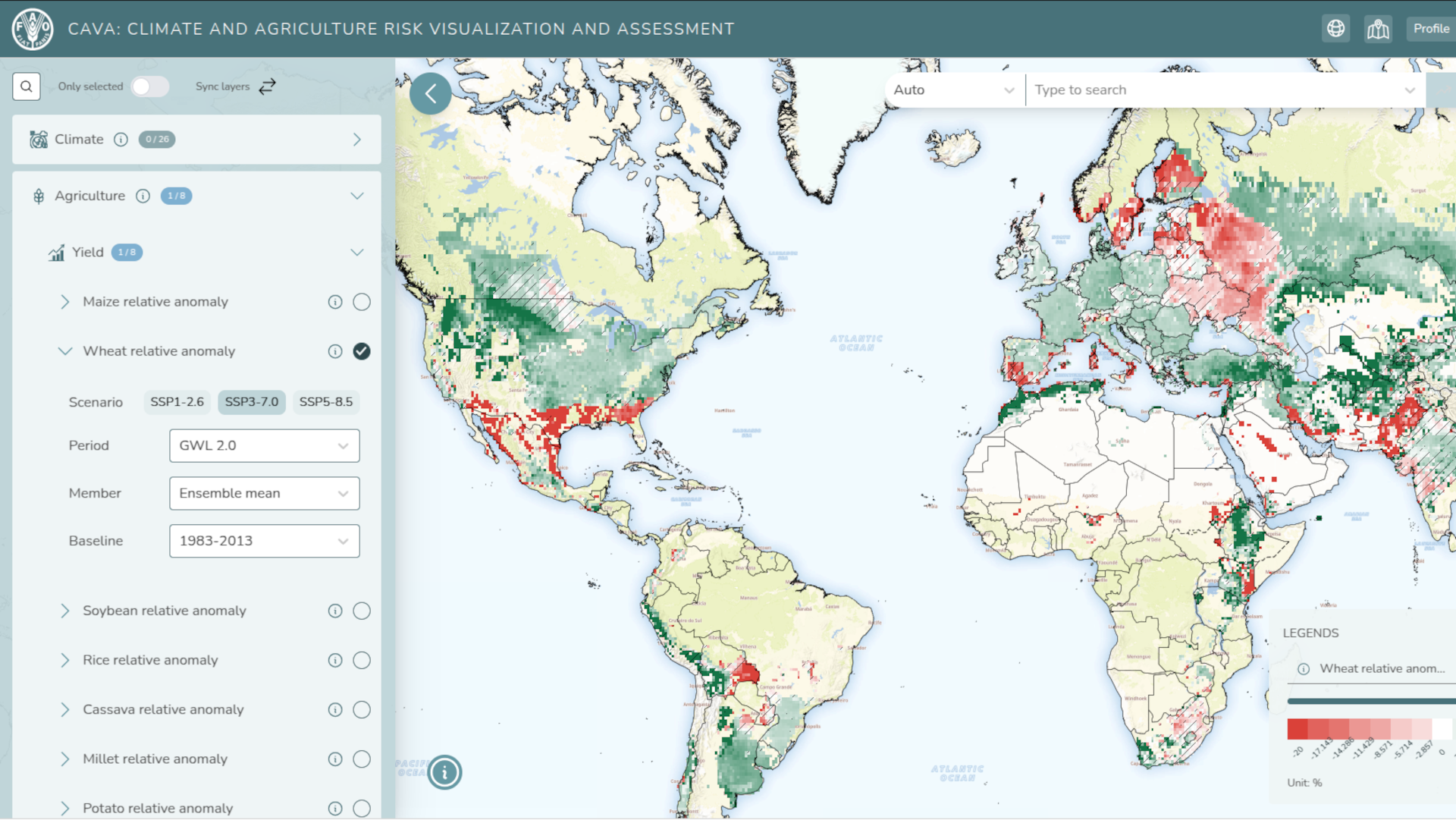
Last year we subjected the UN’s Food and Agriculture Organisation’s Climate and Agricultural Risk Visualization and Assessment Atlas (FAO CAVA, for short) to a complete redesign, so that it now features a more modern, simpler interface. You can access it via this link.
The Copernicus Interactive Climate Atlas does feature a few novelties too, such as new datasets and functionalities. And it will shortly feature a simpler, more intuitive design as well, which is what we’re working on right now…
The AdapteCCa Climate Scenario Viewer we developed for the Fundación Biodiversidad also had quite a data update, as we regularly do.
Other projects
Our permanent commitment with Copernicus services is reflected in several contracts that ended last year, on the evolution and maintenance of the Climate Data Store and on user uptake information from C3S and CAMS users.
And to be highlighted as well – the progress made in the development of a Climate Emulator for the European initiative Destination Earth, as we explained in this post.
As you know, should you want to count on Predictia for projects like the ones mentioned in this post, you can reach out to our team via predictia@predictia.es or via any other contact means suggested in our Contact section.