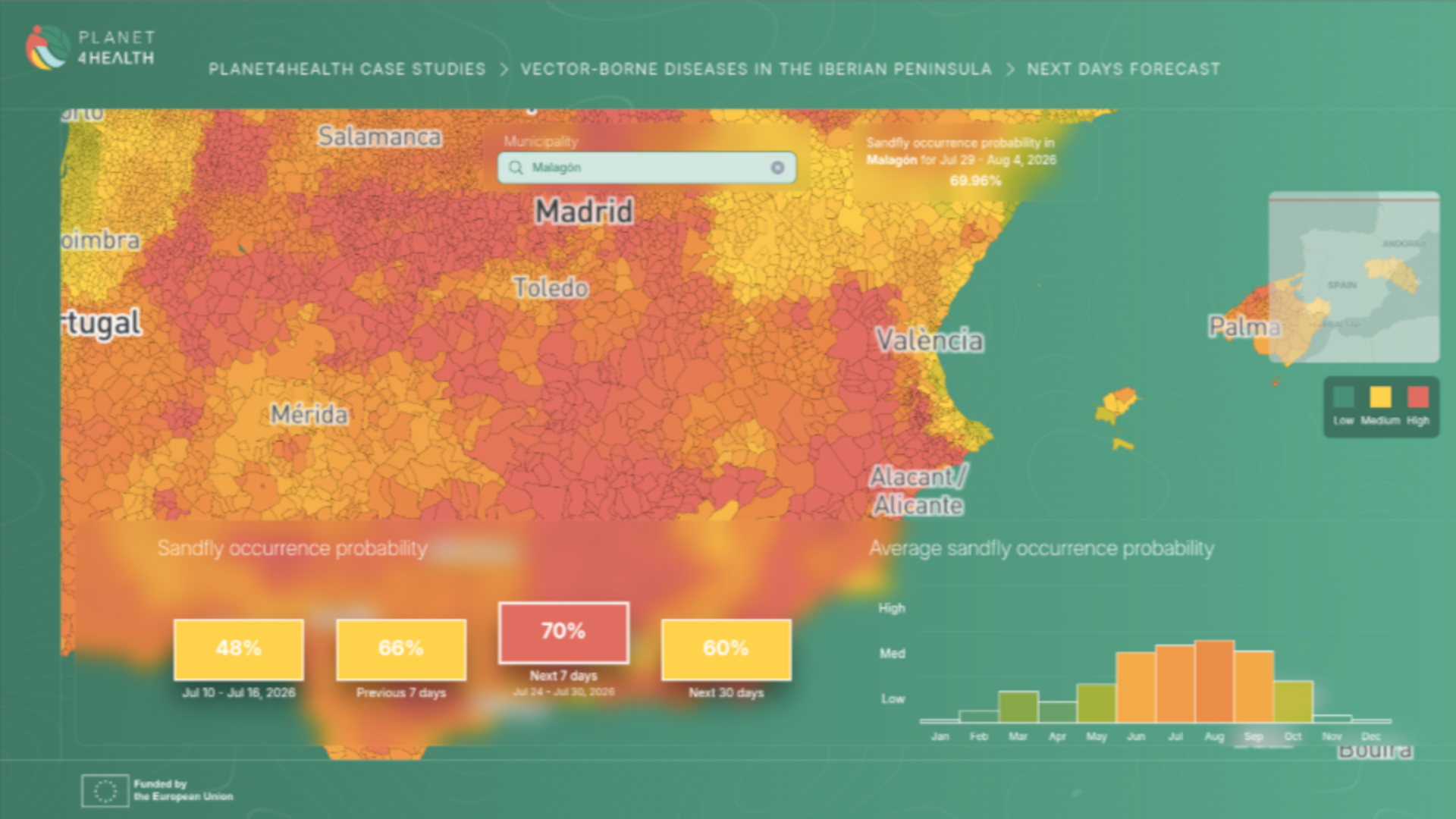
The Early-Warning System (EWS) we’re developing for the EU-funded Planet4Health project and the short-term cloud-forecasting component for the European initiative Destination Earth will constitute Predictia’s contributions to the European Geosciences Union General Assembly (EGU26), to be held in Vienna from 3-8 May.
In the case of the former, it’s a web-based service designed to anticipate –in the Iberian Peninsula and in different time-scales– the risks of meteorological conditions favouring the spread of sand fly, a vector whose bite can transmit diseases such as leishmaniasis. This disease is mainly harmful for dogs, but can be lethal to humans as well, if left unchecked. The EWS will provide key information for the veterinary and public health sectors.
The system (using Machine Learning-based data modelling) integrates high-resolution climate data (both spatial and temporal), temperature, humidity and rainfall indexes, environmental variables and information regarding the presence of vectors, among others. Besides, its design makes it easy to adapt to other regions of the planet.
Our colleague Sergio Natal will be in charge of presenting it on May 4. You may read a summary here.
AI-powered cloud forecasting for the photovoltaic industry
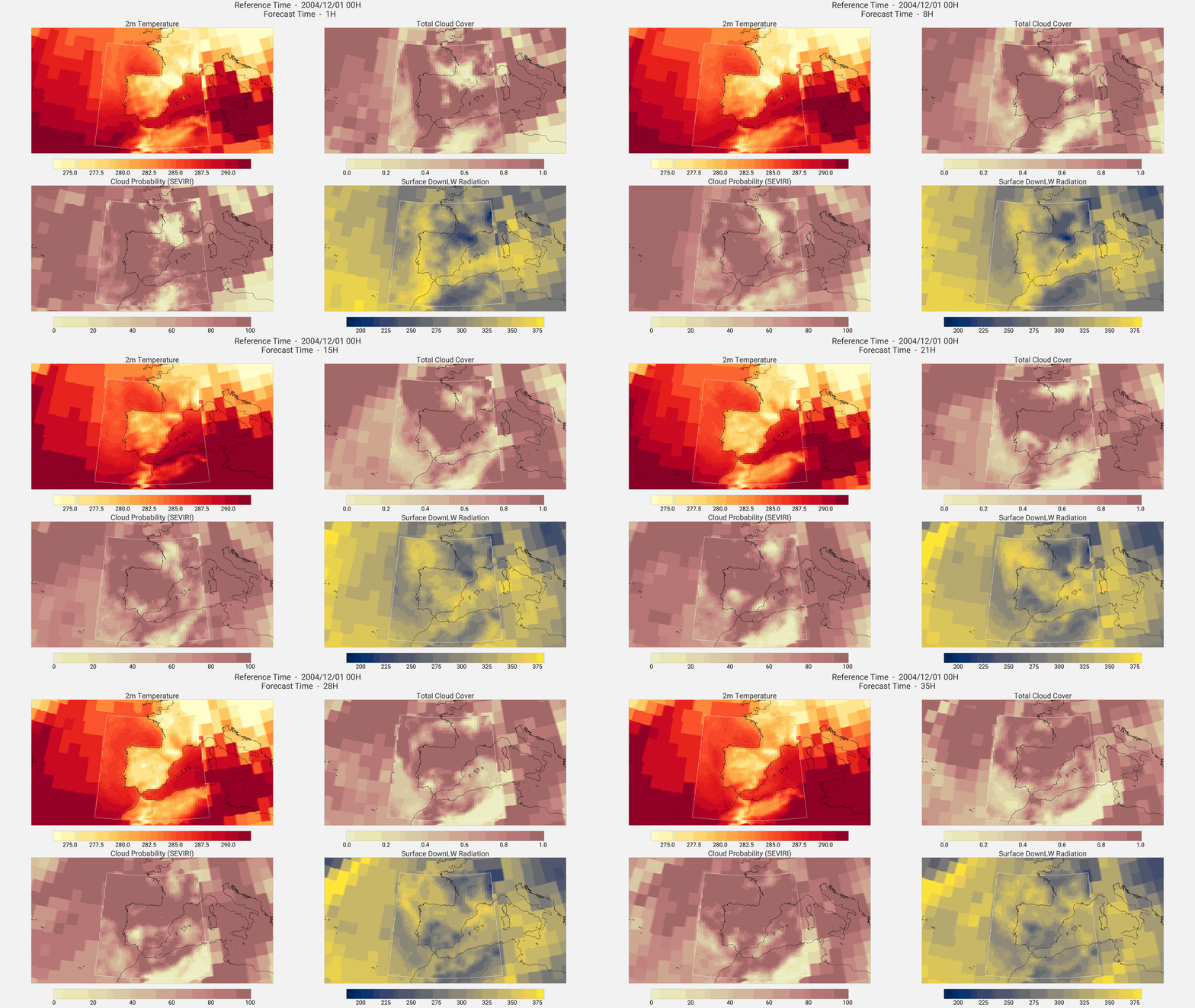
Our second contribution to EGU26, spearheaded by our colleague Fernando Iglesias-Suarez, consists of a component for the European initiative Destination Earth (DestinE) that models cloud-related fields using Deep Learning up to the next 12 hours. As we explained in an earlier blogpost, we’ve been able to successfully reproduce it so far, featuring a better representation of surface solar irradiance. The outcome is scientifically-validated information that will contribute to better management and planning in the photovoltaic industry.
You can read more here about the topic Fernando will be presenting on May 5.
A constant participation at EGU
These sort of contributions to one of the leading conferences in the field have been the norm over the past few years.
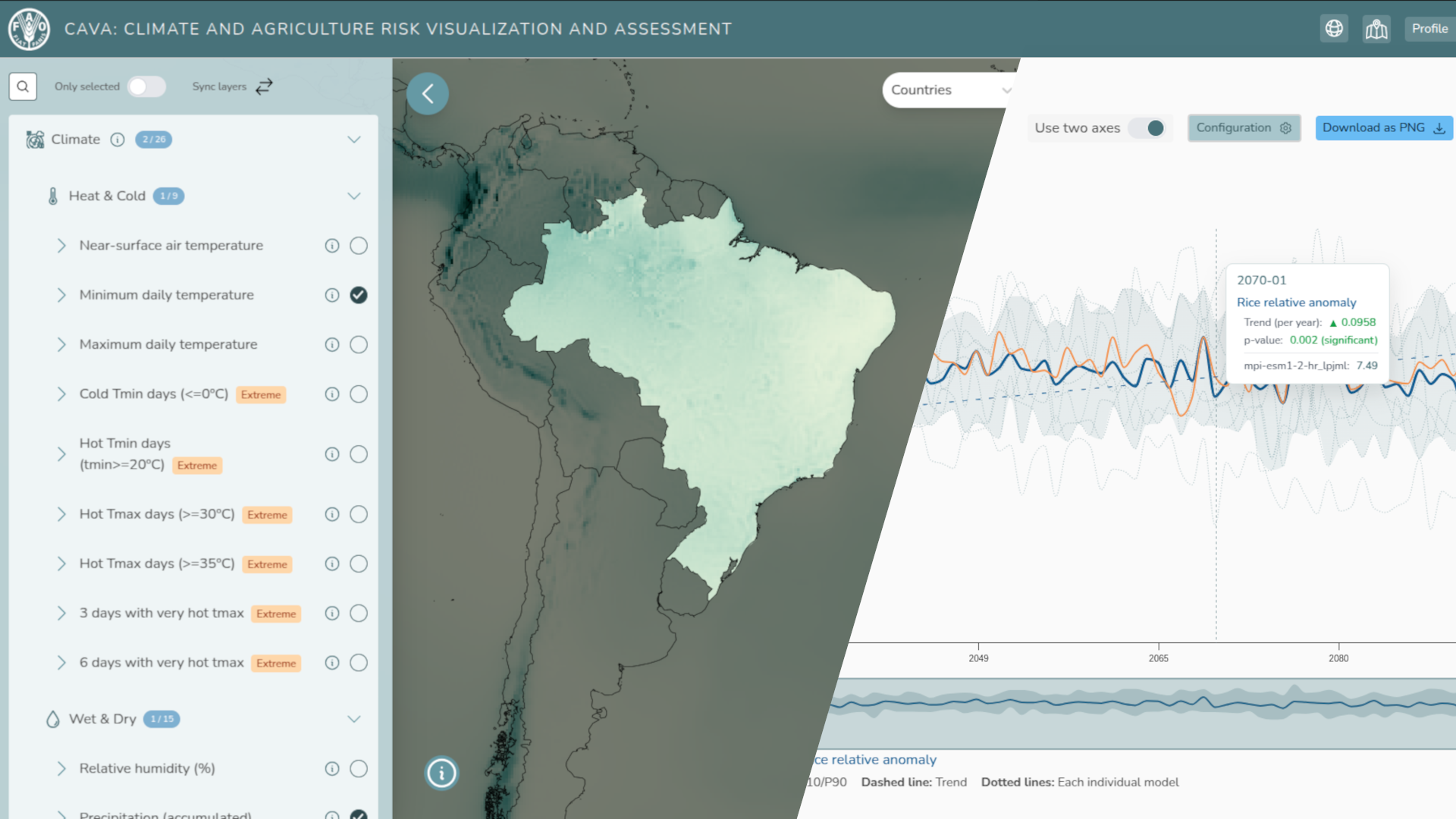
At EGU25, our colleague at the University of Cantabria Rodrigo Manzanas (with whom we’ve been working in several different projects) presented the Climate and Agriculture Visualisation and Assessment (CAVA) platform which we developed for UN’s Food and Agriculture Organization (FAO).
Here's the summary and here's the platform.
A year earlier, at EGU24, our colleague Antonio Pérez presented this poster about the Deep Learning model we trained to improve reanalysis data spatial resolution applied over the Iberian Peninsula.
We published a detailed blogpost on the super-resolution model, in case you want to dig deeper.
It was also Antonio Pérez who presented at EGU22. That year our contribution revolved around a Deep Learning model trained for air quality forecast bias correction, with the ultimate goal of improving air quality forecasts. You can read the summary here and a blogpost on the topic here.
Should you need more information about these or other topics, you can reach out to our team by sending an email to predictia@predictia.es or via any other means provided in the Contact section.